Morfologische en ecologische aspecten van hermeandering
Morphological and ecological aspects of stream restoration
Funded by STOWA
(2009-2014)
Wageningen University and Alterra
My role was to identify, quantify and understand the morphological processes in lowland streams.
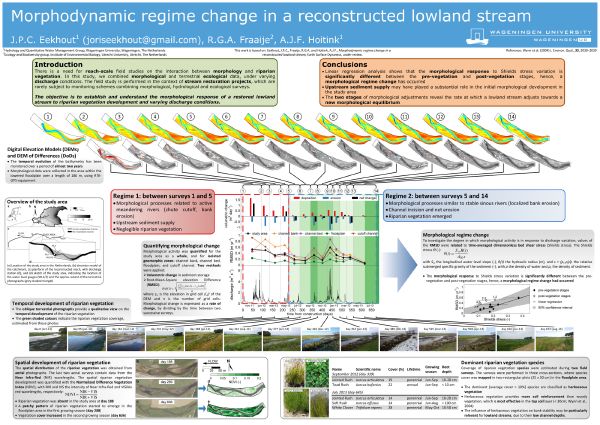
In 2009 I started my PhD research at the Hydrology and Quantitative Water Management Group at Wageningen University. The research focussed on morphological processes of lowland streams in the context of stream restoration. My PhD research I performed in the Netherlands. During my PhD I monitored several stream restoration projects, performed a large-scale field experiment and studied historical meandering processes. The results of my PhD research were published in peer-reviewed publications and presented at international scientific conferences. I also published several popular scientific articles and a report to support stream restoration practitioners to design, construct and maintain stream restoration projects.
Stream restoration projects
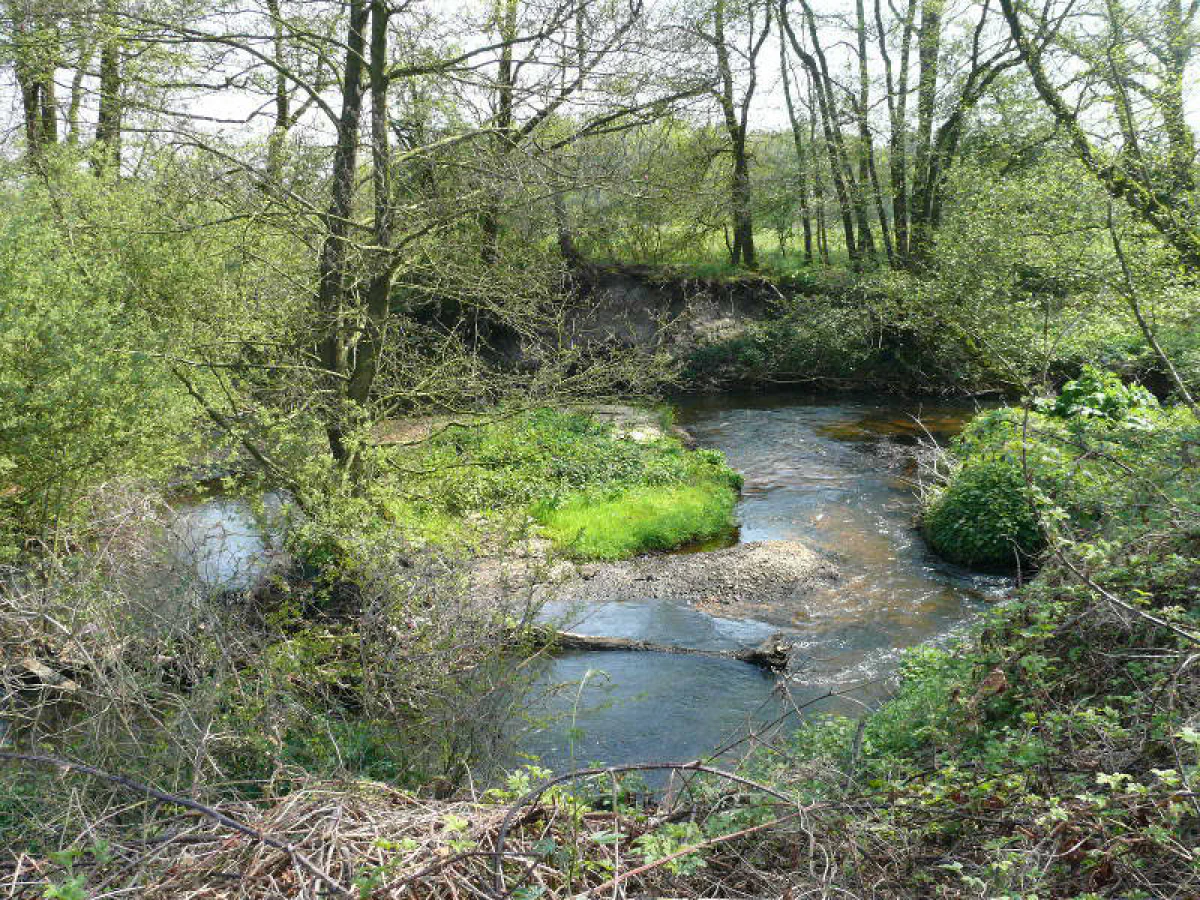
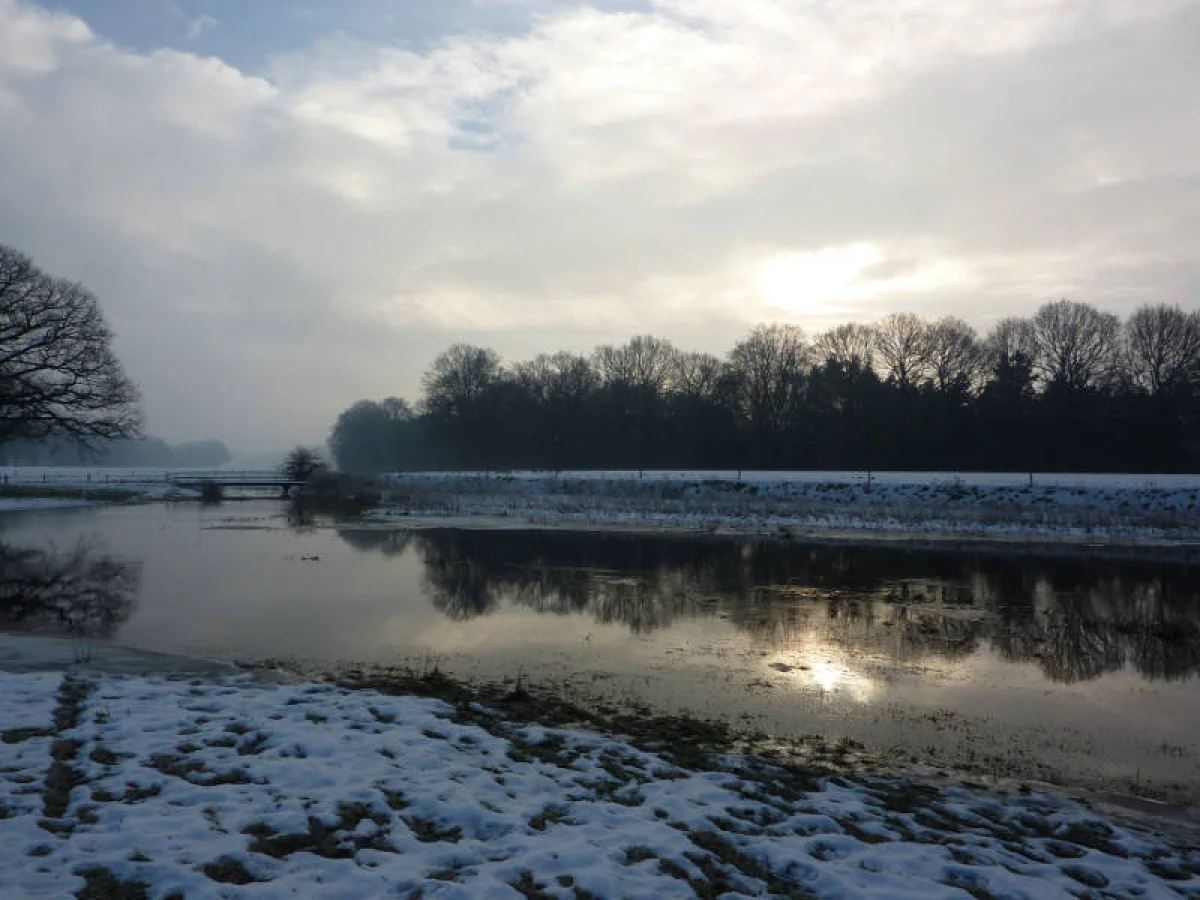
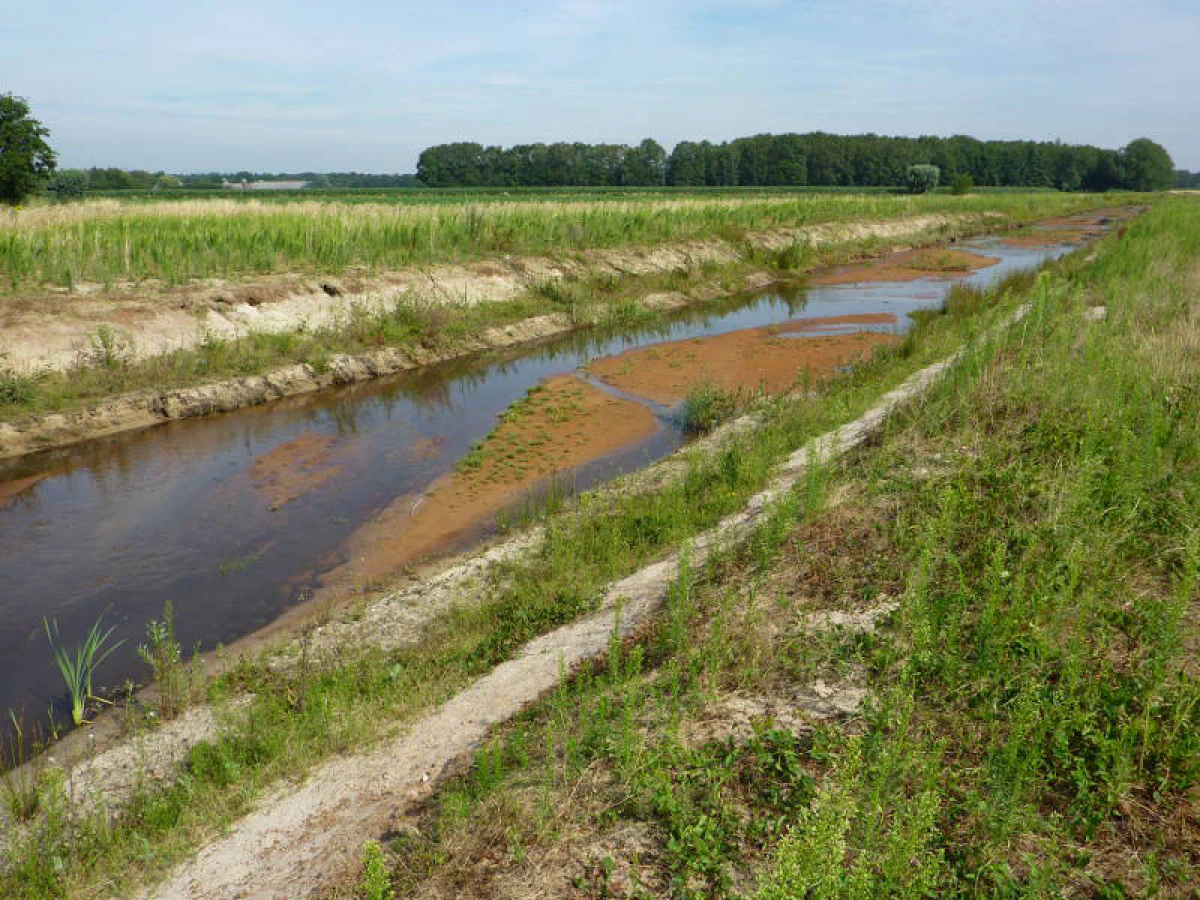
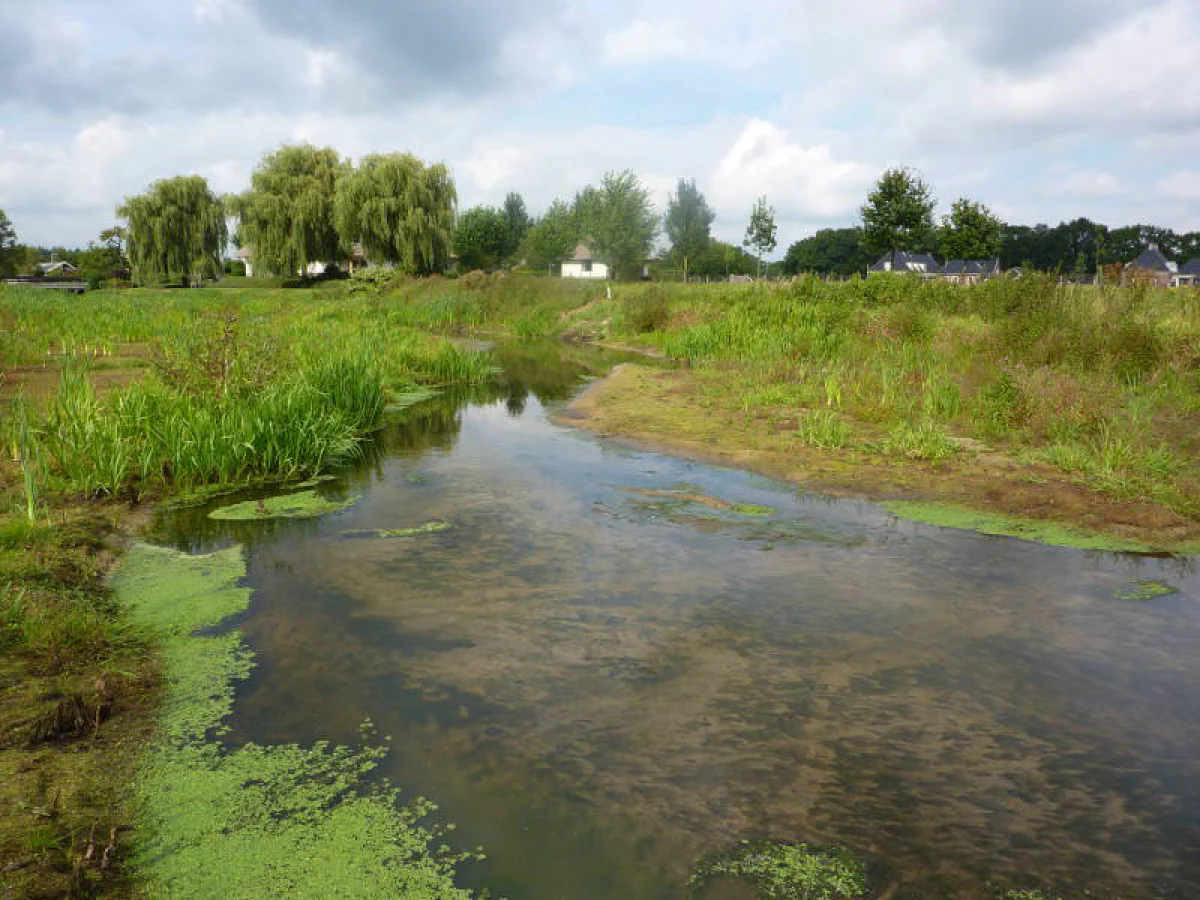
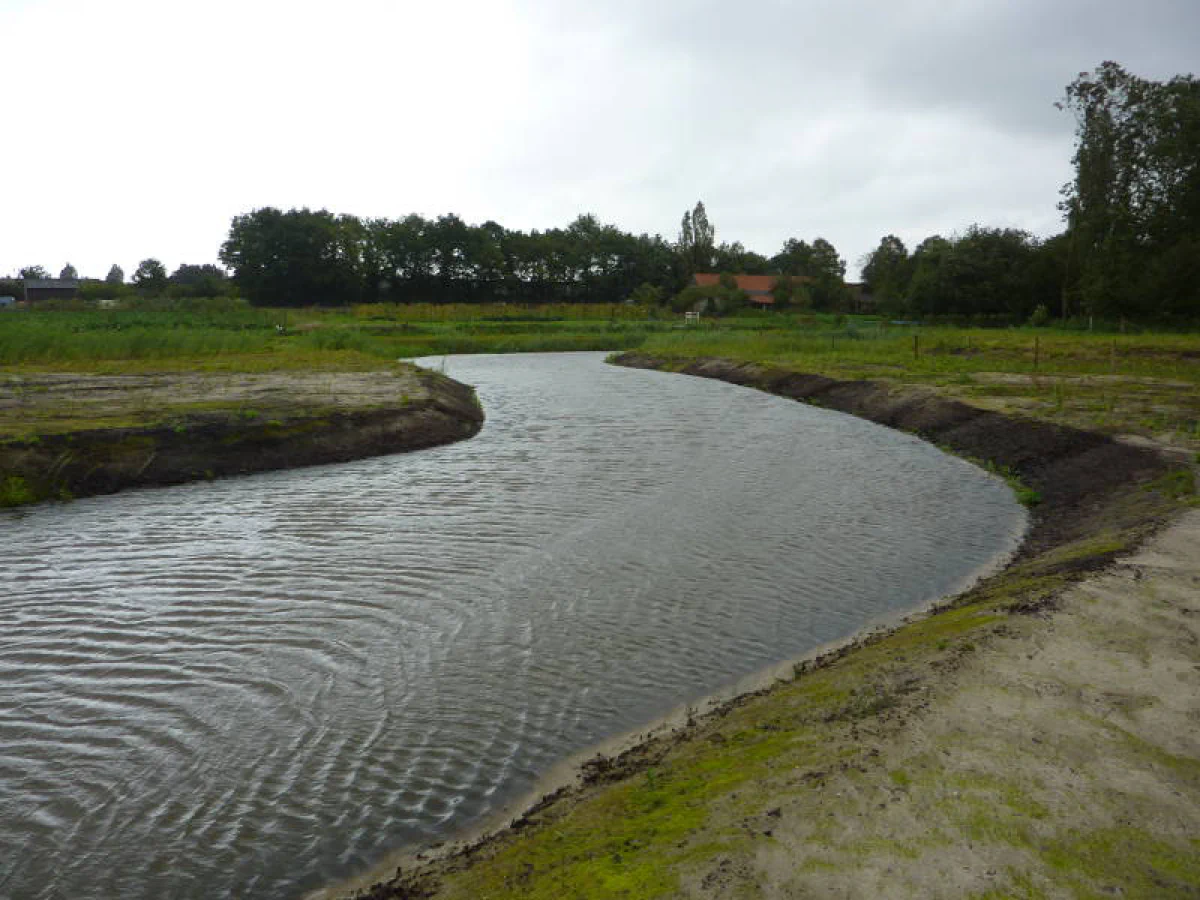
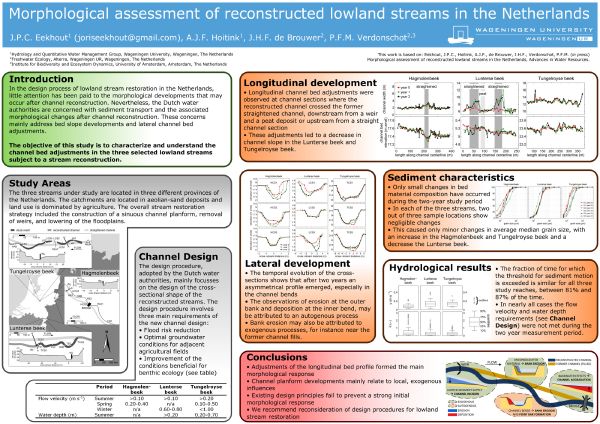
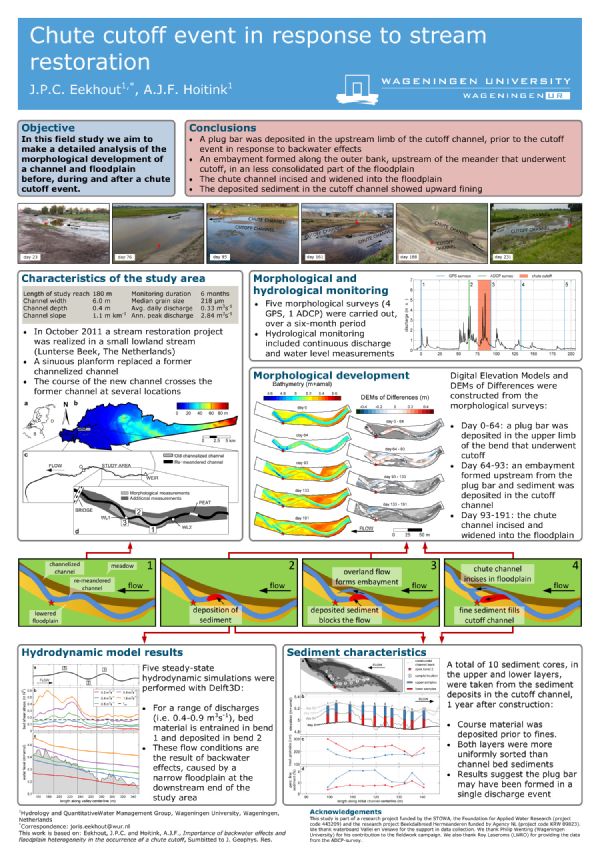
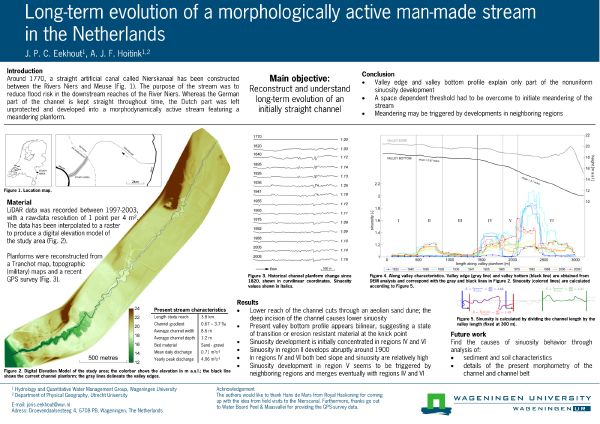
I monitored several stream restoration projects during my PhD research. Below you will find photos of the field sites. At three sites (Hagmolenbeek, Lunterse beek and Tungelroyse beek), I monitored the morphological development of stream restoration projects. The former channelised channel was replaced by a sinuous channel planform, typically described as re-meandering. The channel reconstruction also involved lowering of the floodplain, to accommodate more water during flood events. At these field sites, I performed morphological surveys, sampled sediment and measured waterlevel and discharge (continuously). A field-scale experiment on the development of alternate bars was performed in the Hooge Raam. Here, I studied the spatial and temporal development of alternate bars, which is related to the initiation of meandering. To achieve this, the spatial and temporal resolution of the morphological measurements was increased, compared to the other sites. At the Gelderns-Nierskanaal I studied the initiation of meandering over a period of more than 200 years through analysis of historical maps. Here, I also performed field work, however, the focus was on long time scales, therefore I analysed historical topographic maps. Measured data obtained from the four field campaigns can be found on my FigShare profile.
Project Gallery
Photo of Gelderns-NierskanaalPhoto of Hagmolenbeek stream restoration projectPhoto of Hooge Raam large-scale field experimentPhoto of Lunterse beek stream restoration projectPhoto of Tungelroyse beek stream restoration project
River Flow 2012: Proceedings of the sixth edition of the international conference on fluvial hydraulics
:
623-627,
San Jose, Costa Rica,
September 5-7,
2012
EUROMECH Colloquium 523, Ecohydraulics: linkages between hydraulics, morphodynamics and ecological processes in rivers
:
207-211,
Clermont-Ferrand, France,
June 15-17,
2011